
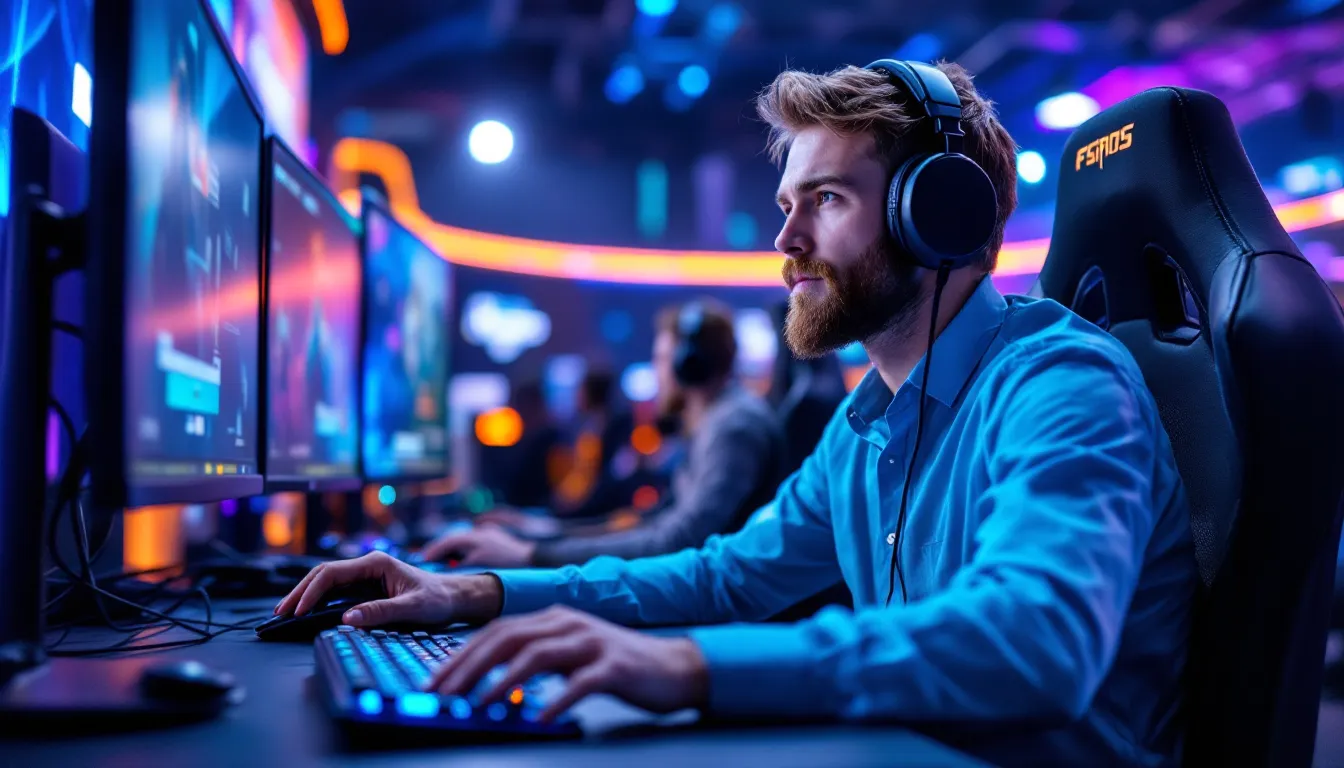
The debate over whether gaming deserves recognition as a sport has simmered for years, but 2026 marks a turning point. As esports continues to eclipse traditional entertainment benchmarks, pulling in viewership numbers that rival mainstream sports, generating billion-dollar tournament prize pools, and commanding sponsorships from Fortune 500 companies, the question isn’t whether gaming can be a sport anymore. It’s why gatekeepers of athletic legitimacy haven’t already cemented esports into mainstream sporting institutions. The athletic demands of competitive gaming, the massive global infrastructure supporting professional play, and the undeniable economic footprint prove that esports isn’t just entertainment, it’s a sport that demands formal recognition.
Table of Contents
ToggleKey Takeaways
- Competitive gaming meets every legitimate criterion for sporting recognition, including measurable athletic skill, strategic depth, professional organization, and massive global audiences that rival traditional sports.
- Professional esports players demonstrate exceptional reflexes under 100 milliseconds, hand-eye coordination, mental endurance, and require dedicated physical conditioning similar to Olympic athletes.
- The esports industry has generated over $1.3 billion in revenue globally with projections reaching $2+ billion by 2026, supported by sponsorships from Fortune 500 companies and franchised professional leagues operating year-round.
- Regional recognition through the Asian Games (since 2018) and Paris 2024 Olympic Esports Week demonstrates that gaming as a sport is already receiving institutional validation across multiple continents.
- Major barriers to full sporting recognition are primarily governance fragmentation and cultural perception rather than objective athletic criteria, with infrastructure being built systematically through organizations like the Global Esports Federation.
- Over 200 U.S. colleges now offer esports scholarships with dedicated facilities, establishing gaming as a legitimate career pathway and signaling mainstream acceptance equivalent to traditional athletics.
The Athletic Requirements of Competitive Gaming
Reflexes, Hand-Eye Coordination, and Precision
Top-tier esports players operate at levels of mechanical precision that rival Olympic athletes in their respective disciplines. In games like Counter-Strike 2 or Valorant, professional players maintain reaction times under 100 milliseconds, faster than the human average of 200-300ms. This isn’t natural talent alone: it’s honed through thousands of hours of deliberate practice.
Hand-eye coordination in competitive gaming is measurable and brutal. A Valorant agent’s ability to place crosshair on target while tracking moving opponents, managing recoil patterns, and processing split-second information mirrors the precision demands of archery or shooting sports. Players like those competing in the VCT Champions tournament execute spray patterns, ability timings, and positioning calls simultaneously, all within milliseconds.
The physical component extends beyond the screen. Professional gaming requires sustained mouse and keyboard accuracy across 8-10 hour scrims and tournament days. Wrist injuries, RSI (repetitive strain injury), and fatigue are real occupational hazards that top organizations now address with dedicated sports science staff.
Strategic Thinking and Mental Endurance
If reflexes are the baseline, strategy is the ceiling. Competitive gaming demands real-time decision-making under extreme pressure, with high stakes and incomplete information, exactly like traditional sports. A League of Legends mid-laner must anticipate enemy rotations, manage cooldowns, track enemy positions off-screen, and make macro calls that impact the entire game state, all while executing frame-perfect mechanics.
Mental endurance is the underrated pillar of esports athleticism. A best-of-five tournament series can stretch 4-6 hours. Players must maintain peak focus, adapt to opponents’ strategies mid-series, manage tilt, and execute under crushing pressure. The psychological resilience required mirrors that of marathon runners or chess grandmasters competing in lengthy tournaments.
Meta shifts, patch changes, and opponent preparation create layers of strategic complexity. Teams spend weeks analyzing opponents, theorycrafting lineups, and drilling execution. The cognitive load rivals preparing for Olympic competition, scouts study footage, analysts break down opponents’ tendencies, and coaches gameplan for dozens of possible scenarios.
Physical Training and Conditioning in Esports
Professional esports teams have recognized what casual gamers often overlook: peak gaming performance requires physical conditioning. Top organizations now employ fitness coaches, nutritionists, and sports psychologists. T1, FaZe Clan, and Team Liquid maintain rigorous training regimens that include cardio, strength work, and flexibility training.
Physical conditioning in esports isn’t about building muscle: it’s about optimizing cardiovascular health, reducing injury risk, and enhancing mental performance. Proper posture, wrist conditioning, and core strength directly impact consistency and longevity. Professional players treat their bodies like athletes do, because they are.
Tournament preparation includes sleep protocols, meal planning, and stress management. Major tournaments often employ on-site trainers and recovery specialists. The Seoul Dynasty in Overwatch League, for example, maintains a training facility with fitness equipment, physical therapists, and conditioning staff. This infrastructure mirrors traditional sports organizations, not casual gaming setups.
Global Recognition and Professional Infrastructure
Major Tournaments and Prize Pools
The tournament ecosystem in esports has matured dramatically. The International (Dota 2’s world championship) has crowned million-dollar champions for a decade. League of Legends World Championship draws 100+ million concurrent viewers and distributes massive prize pools across regional leagues globally. VALORANT Champions 2023 featured a $5 million prize pool, numbers that dwarf many traditional sporting events.
Regional professional leagues now operate year-round with franchised models. The League Championship Series (LCS), European League of Legends Championship (EU LEC), Korean League (LCK), and China’s LPL employ hundreds of players on salary with benefits packages. These aren’t garage operations, they’re structured, regulated competitions with defined seasons, playoffs, and championship structures identical to traditional sports leagues.
Inter-regional competition has established a clear hierarchy and qualification system. Teams earn ranking points, compete in playoffs, and qualify for international tournaments. The stakes are real: a single world championship run can elevate a player’s career, secure multi-year contracts, and generate life-changing wealth. This mirrors the trajectory of traditional athletes climbing the professional ranks.
Sponsorships, Teams, and League Structures
Major corporations now compete for esports team ownership and sponsorships. Philadelphia 76ers owners bought into the Overwatch League. LCS teams attract investment from established sports franchises. Red Bull, BMW, Mercedes-Benz, and Intel sponsor esports teams and tournaments, corporations that wouldn’t touch gaming if it wasn’t legitimate business.
Professional teams operate like traditional sports franchises. They maintain coaching staff, support crews, nutritionists, and analysts. Salaries range from $50,000 to seven figures annually for star players. Contract negotiations, salary caps (in some leagues), and transfer windows create an ecosystem mirroring professional football or basketball.
Franchising models have brought stability. Teams own permanent slots in leagues, invest in infrastructure, and build fan bases. The LCS franchising system guaranteed ten teams permanent slots, encouraging investment in facilities, player development, and branding. This structural legitimacy attracts institutional capital and turns gaming into a career path, not a hobby.
International Governing Bodies and Standards
Organizations like the International Esports Federation (IEF) and Global Esports Federation (GEF) work toward standardized rules, anti-doping protocols, and competitive integrity. While esports governance isn’t as centralized as traditional sports yet, the infrastructure is being built deliberately and systematically.
The IEF has established testing protocols for performance-enhancing substances and implements bans for violations. Anti-cheat systems in competitive titles are industry standards. Technical officials, referees, and judges oversee matches with professionalism matching traditional sports broadcasts. Tournament integrity matters, and the industry polices itself accordingly, evidence that competitive legitimacy isn’t negotiable.
The Revenue and Viewership Reality
Streaming, Broadcasting, and Audience Engagement
Esports viewership has cracked traditional sports’ audience ceilings in several regions. The 2023 League of Legends World Championship drew over 5 million concurrent viewers globally. VALORANT consistently maintains 100,000+ concurrent viewers on Twitch. Compare that to niche traditional sports, esports outpaces them by orders of magnitude.
Streaming platforms have become the primary distribution channel. Twitch hosts millions of hours of esports content monthly. YouTube Gaming, Facebook Gaming, and regional platforms in Asia ensure global accessibility. This distributed model actually expands viewership compared to traditional sports locked behind cable subscriptions or regional broadcasters.
Fan engagement in esports mirrors and often exceeds traditional sports. Communities organize fantasy leagues, betting markets (legal in many regions), merchandise sales, and fan events. The interaction between streamers, professional players, and audiences creates parasocial bonds that drive sustained viewership and sponsorship value.
Economic Impact and Career Opportunities
The esports industry generated over $1.3 billion in revenue globally in 2024, with projections reaching $2+ billion by 2026. This isn’t hypothetical growth, it’s materialized in salaries, sponsorships, and franchise valuations. Professional players earn six-figure salaries. Coaching, analytical roles, broadcast talent, and organizational positions create thousands of full-time careers.
Organizations like Dot Esports and dedicated esports media outlets employ journalists, analysts, and content creators focused entirely on competitive gaming coverage. This media ecosystem signals mainstream legitimacy, similar to sports journalism covering traditional athletics.
Career paths have diversified beyond playing. Content creators, streamers, and personalities build multimillion-dollar brands. Organizational roles in management, coaching, analysis, and support generate sustainable livelihoods. Young gamers now realistically consider esports as a career path, a shift that wouldn’t occur in an entertainment category lacking legitimacy.
Comparison to Traditional Sports Revenue Models
While esports revenue still lags marquee traditional sports, the trajectory is identical to how niche sports gained mainstream recognition. MMA generated ~$600 million in 2020: esports has already exceeded $1 billion. Professional poker broke through via television exposure: esports uses streaming to similar effect. The business models align: broadcasting rights, sponsorships, ticket sales, and merchandise.
Regional variations reveal esports’ maturity. In South Korea, esports is a cultural phenomenon with primetime television coverage and mainstream athlete status for top players. China’s esports scene generates billions annually with packed esports stadiums. These aren’t niche markets, they’re proof that esports scales to mainstream legitimacy when cultural acceptance exists.
The revenue diversification in esports actually surpasses some traditional sports. Esports combines ticket sales, streaming rights, sponsorships, merchandise, team franchising, and digital content monetization. This model creates resilience and multiple revenue streams that traditional sports gatekeepers recognize as economically sound.
Esports and Olympic Recognition: Progress and Challenges
Current Olympic Status and Discussions
The International Olympic Committee (IOC) has taken measured steps toward esports integration. In 2018, the IOC released a statement recognizing esports as a sporting activity. The Paris 2024 Olympics featured esports-themed events at the official Olympic Esports Week. By 2028, esports could debut as a medal sport at the Los Angeles Olympics, a milestone that would crystallize legitimacy.
Regional Olympic bodies have moved faster. The Asian Games included esports as a medal sport starting in 2018 (Hangzhou 2022). The Southeast Asian Games has featured esports since 2019. This precedent shows that Olympic recognition isn’t a binary gate, it’s a gradual integration process that’s already underway.
The stalling point isn’t esports’ legitimacy: it’s definitional and governance questions. The IOC requires international sports federations to meet strict criteria: transparent governance, anti-doping protocols, and regulatory standards. Esports fractured across multiple game titles and governing bodies complicates centralized oversight. But this is solvable, it’s governance infrastructure, not athletic legitimacy.
Barriers to Full Sporting Recognition
The primary barrier is cultural perception, not objective criteria. Decision-makers in traditional sports organizations grew up without esports and sometimes view it with skepticism rooted in generational bias rather than rational analysis. This barrier erodes yearly as younger administrators enter leadership and digital natives become the majority audience.
Governance fragmentation remains real. Unlike basketball or tennis with single governing bodies, esports encompasses dozens of games each with their own ecosystem. Standardizing anti-doping, eligibility, and rule enforcement across titles is complex. But governing bodies like the GEF and IEF are building this infrastructure deliberately, it’s a years-long project, not an impossibility.
The voluntary substance testing protocols and game developer control over competitive integrity aren’t ideal compared to traditional sports’ independent oversight. But, top esports organizations now carry out rigorous testing, and game developers maintain anti-cheat systems with professional-grade standards. These gaps close incrementally, and Mobalytics and similar analytical platforms help maintain competitive integrity through transparent, data-driven analysis.
Arguments Against Gaming as a Sport and Counterpoints
Common Misconceptions and Rebuttals
Claim: “Gaming is sedentary: real sports require physical exertion.”
Rebuttal: This ignores sports like archery, shooting, equestrian, and chess (now an IOC-recognized sport). Physical exertion isn’t the defining characteristic of sport, competition, skill, and standardized rules are. By that logic, professional poker and esports lose credibility: by practice, they gain acceptance. The misconception conflates physical labor with athletic legitimacy, an outdated framework.
Claim: “Game developers can change the rules arbitrarily, unlike traditional sports.”
Rebuttal: Game balance patches mirror sport rule evolutions. Basketball changed the three-point line: football evolved pass-interference rules. Competitive esports uses tournament-locked patch versions, meaning Valorant Champions operates on a specific frozen patch, not the rolling version casual players use. This allows competitive integrity while allowing evolution. The argument assumes esports lacks governance: in reality, it operates differently, not less rigorously.
Claim: “Esports isn’t physically demanding enough to warrant sporting status.”
Rebuttal: Professional gamers experience measurable cardiovascular stress, grip fatigue, postural strain, and mental exhaustion identical to endurance sport athletes. Studies measuring cortisol, adrenaline, and heart rate during competitive esports show physiological stress comparable to traditional sports. The demand is real, it’s just neurological and muscular rather than purely cardiovascular.
Health, Wellness, and Competitive Integrity
A legitimate concern: esports must address burnout and health risks. The culture of grinding 12+ hour days, poor ergonomics, and mental health neglect has harmed players. Top organizations now address this proactively. Team Liquid, FaZe Clan, and regional league organizations carry out mandatory breaks, ergonomic equipment, and sports science support.
Competitive integrity in esports actually outpaces some traditional sports in certain areas. Anti-cheat systems in competitive esports are cutting-edge. Game developers roll out patches to address exploits and balance issues. Transparency in patch notes and competitive rule sets exceeds some traditional sports’ opacity. Where traditional sports struggle with corruption and integrity, esports’ digital infrastructure provides verifiable, auditable integrity.
The conversation around substance abuse in esports has matured. Stimulant use to maintain focus during long tournaments is a real issue, now being addressed with testing protocols and education. This mirrors traditional sports’ journey toward cleaner competition. Rather than esports lagging, it’s catching up at an accelerated pace.
Mental health awareness has improved dramatically. Organizations now employ sports psychologists, carry out wellness protocols, and discuss player burnout openly, conversations traditional sports sometimes avoided. Esports’ younger culture and digital-native audiences may actually lead traditional sports in athlete welfare standards.
The Future of Gaming as a Mainstream Sport
Emerging Trends and Technological Advancement
Mobile esports is reshaping the landscape. Games like PUBG Mobile and Honor of Kings boast competitive scenes with multi-million-dollar tournaments and massive audiences, especially in Asia. As mobile infrastructure improves globally, this segment’s legitimacy parallels console and PC esports. By 2026, ignoring mobile esports when discussing sporting legitimacy would be incomplete.
VR competitive gaming is emerging. While still niche, VR titles with competitive rulesets are gaining traction. As VR technology matures and competitive infrastructure develops, this could expand esports’ definition and appeal.
Blockchain and Web3 introduce complications and opportunities. Tokenized esports, player ownership, and decentralized governance structures could revolutionize league operations. While crypto skepticism is warranted, the underlying infrastructure questions, how players own their careers, how leagues distribute revenue, are legitimate. Expect experimentation here.
Artificial intelligence will reshape analysis, prediction, and game design. AI-driven performance analysis, predictive coaching, and anti-cheat systems will elevate competitive standards while creating new roles. The technology will make esports more legible to traditional sports audiences through advanced analytics and data visualization.
Youth Development and Educational Integration
Scholar-athletes pursuing esports scholarships are now commonplace. Over 200 U.S. colleges offer esports scholarships, with full-ride opportunities competing with traditional athletics. Universities like University of California and Texas Tech have dedicated esports facilities and coaching staff.
This institutional integration signals mainstream acceptance. When prestigious universities invest millions in esports facilities and scholarships, the competitive legitimacy bar is cleared. Young players now pursue esports as a legitimate career path alongside traditional athletics, a shift that compounds annually.
Higher education integration drives youth development pipelines. Collegiate esports creates structure, mentorship, and credentialing that elevates player skill floors. The professionalization of youth development mirrors traditional sports’ academy systems. A 16-year-old can now aspire to professional gaming with a clear developmental pathway, evidence of sportification.
Secondary school esports programs are proliferating. High school esports leagues operate in virtually every U.S. state. The Escapist and similar gaming media outlets cover esports at all competitive levels, creating a media ecosystem that legitimizes youth participation and career pathways.
Educational benefits extend beyond career pipeline. Esports programs develop teamwork, communication, strategic thinking, and resilience. Schools increasingly recognize esports as offering equivalent developmental value to traditional athletics. This educational legitimacy accelerates mainstream acceptance, if schools invest in esports as developmental athletics, cultural acceptance follows.
Conclusion
The case for gaming as a sport isn’t speculative, it’s evident in infrastructure, economics, and athlete development. Competitive esports meets every legitimate criterion for sporting recognition: it demands measurable athletic skill (reflexes, precision, endurance), strategic depth, professional organization, massive global audience, institutional legitimacy, and economic sustainability.
Resistance to esports recognition increasingly reflects generational gatekeeping rather than objective analysis. The athletic demands are real. The professional infrastructure rivals traditional sports. The viewership and revenue outpace niche traditional sports. The career pathways are established and expanding.
By 2026, the debate shouldn’t be whether gaming deserves sporting legitimacy. It’s whether traditional sporting institutions will formalize recognition of a legitimacy that’s already materialized. The trajectory is clear: esports will achieve mainstream sporting status not because skeptics capitulate, but because younger generations treat it as normative and institutional players adapt to align with cultural reality.
Competitive gaming isn’t the future of sport. It’s sport, now. The recognition is a formality following behind reality.

