
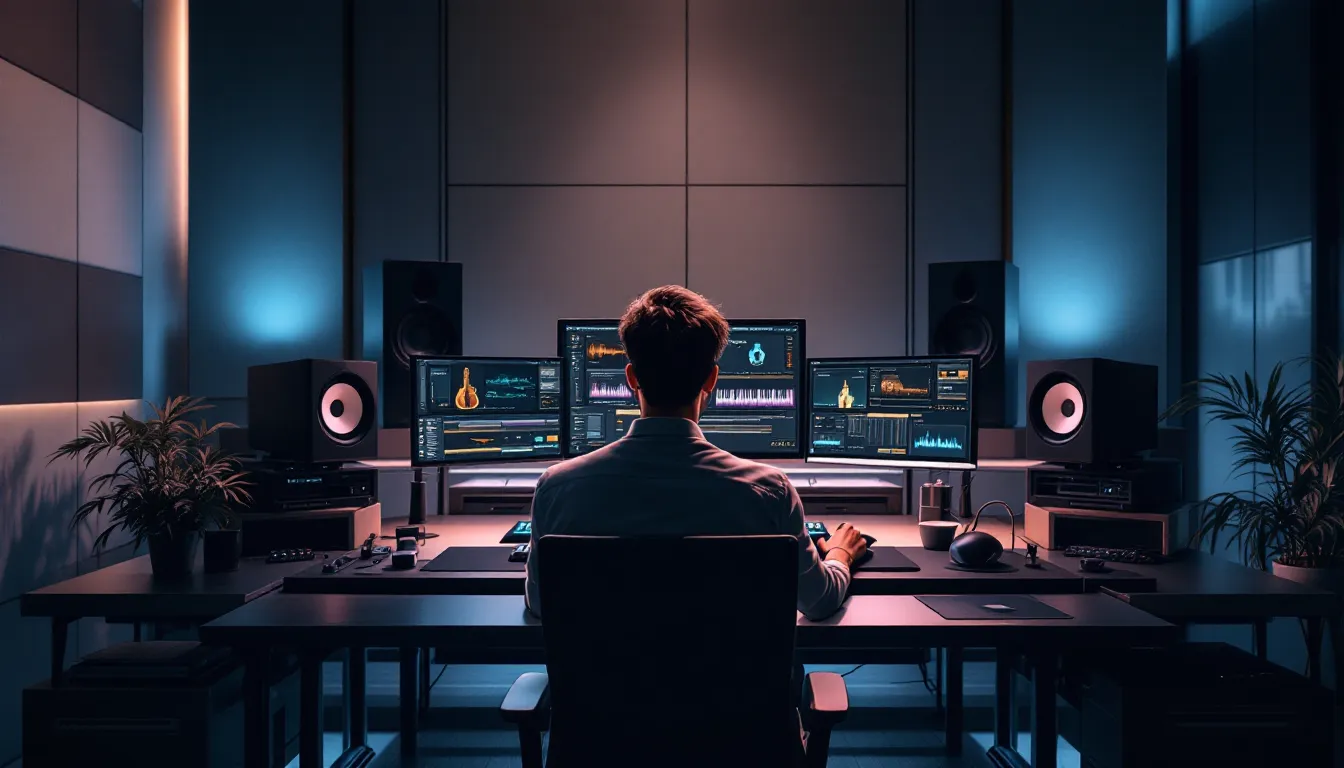
Gaming has transcended visuals alone, the music is what haunts you long after you’ve put down the controller. That iconic boss battle theme, the melancholic piano during a story moment, the pulse-pounding drum drop before a ranked match, these gaming songs are the backbone of unforgettable moments. Whether you’re a casual player who hums the Legend of Zelda theme or a competitive gamer pumping yourself up with esports anthems, game soundtracks have evolved into a legitimate art form that rivals film scores. In 2026, gaming music has become so integral to the experience that many players specifically choose games based on composer reputation alone. This guide explores what makes gaming songs iconic, traces their evolution across platforms, introduces you to the legendary composers shaping the medium, and shows you how to use music as both inspiration and competitive edge.
Table of Contents
ToggleKey Takeaways
- Gaming songs have evolved from simple hardware-generated beeps into cinematic compositions that rival film scores, with composers like Koji Kondo and Nobuo Uematsu establishing them as a legitimate art form.
- Iconic gaming music becomes inseparable from the experience through psychological manipulation of memory and emotion, strategic repetition, and perfect synchronization with gameplay pacing and narrative moments.
- Competitive players gain measurable performance advantages by using familiar, high-tempo gaming songs (130-150 BPM) that improve focus and trigger dopamine release without creating distracting surprises.
- Modern game composers use dynamic music systems, orchestration choices, and early production involvement to create immersive soundscapes that adapt in real-time to in-game conditions and player actions.
- Gaming songs are now more accessible than ever through platforms like Spotify, YouTube, Bandcamp, and VGMdb, with specialized communities allowing direct access to composers and remix artists worldwide.
- The best gaming songs transcend their original games to become cultural touchstones—like ‘One-Winged Angel’ or ‘Still Alive’—that define emotional and competitive moments across the entire gaming medium.
What Makes a Gaming Song Iconic
An iconic gaming song does one thing perfectly: it becomes inseparable from the experience. When you hear a few notes, you instantly know the game, the moment, the feeling. But what separates a forgettable track from one that lives in your brain rent-free? It’s a mix of psychology, technical composition, and context.
The Psychology Behind Memorable Game Music
Memory and emotion are tightly linked in the brain, and game composers exploit this relationship masterfully. A memorable gaming song triggers specific neural pathways by combining melody, rhythm, and harmonic progression in ways that feel both novel and satisfying. Dark Souls composer Motoi Sakuraba didn’t just create background noise, he crafted pieces that sync perfectly with combat pacing, building tension as enemy health drops and releasing that dopamine hit when you land the killing blow.
The best gaming songs also leverage repetition without becoming monotonous. Think of the Super Mario Bros. theme: it’s roughly eight notes on loop, yet it’s arguably the most recognizable piece of music ever composed. The genius lies in how those notes fit the game’s rhythm, the music becomes the heartbeat of the gameplay itself. Players don’t consciously think about the music: they feel it through their fingers.
Context matters enormously. Hearing “Still Alive” from Portal in isolation is charming: hearing it as you escape a killer AI in the game is unforgettable. The song works because it complements and amplifies the narrative moment.
How Composers Create Immersive Audio Experiences
Modern game composers don’t just write melodies, they architect entire soundscapes. They work with sound designers, producers, and developers from pre-production onward, unlike film composers who often arrive late in the process. This early involvement means the music can actually shape game design decisions.
Composers use several technical tricks to enhance immersion. Dynamic music systems layer different instrumental stems depending on in-game conditions. When you’re sneaking in a stealth section, the strings might swell subtly: as you’re spotted, percussion kicks in. Games like The Legend of Zelda: Breath of the Wild use this technique so seamlessly that most players don’t consciously register how the music shifts with danger levels.
Orchestration choices matter too. Heavy games like Elden Ring use full orchestras with strong brass sections, this creates an instinctive sense of weight and dread. Lighter, faster games might favor synth and electronic elements that feel snappier and more reactive. Composers also consider how music must compete with gunfire, explosions, or dialogue. A track might sound thin in isolation but perfect when layered with gameplay audio.
The best gaming songs are built for repetition without exhaustion. When you’re grinding a dungeon or stuck on a boss for three hours, that song will loop dozens of times. Composers structure tracks with enough harmonic movement and subtle variation that players stay engaged rather than muted.
The Evolution of Gaming Soundtracks Across Consoles
Gaming music didn’t start with orchestras and dynamic systems. It evolved from the technical constraints of hardware into an art form that rivals Hollywood in scope and ambition.
Classic Nintendo 64 and Retro Game Scores
The Nintendo 64 era (1996–2002) was a turning point. While earlier games like Castlevania (1987) featured impressive compositions, the N64 introduced fully 3D environments that demanded music capable of supporting spatial immersion. Composer Koji Kondo’s work on The Legend of Zelda: Ocarina of Time became the gold standard, those iconic dungeon themes and boss battles established what game music could be.
Retro game composers worked within severe limitations: the Commodore 64 had a dedicated sound chip that could barely handle three simultaneous instruments: the NES had similar constraints. Yet composers like Rob Hubbard and Nobuo Uematsu created masterpieces within these boundaries. Final Fantasy (1987) on the NES sounds primitive by today’s standards, but the main theme demonstrates perfect melodic structure that still holds up.
What made retro game music special wasn’t fidelity, it was melodic clarity. Without orchestral richness, composers had to make every note count. This forced simplicity created earworm melodies that stick with players for decades. The Super Mario Bros. theme is the obvious example, but Koji Kondo’s Donkey Kong Country scores are equally masterful within their sonic palette.
Modern Console and PC Gaming Music
The PlayStation, Xbox, and modern PC era brought CD-quality audio and later full orchestral recordings. This opened new possibilities but also presented a danger: composers could now hide weak compositions under lush instrumentation.
The best modern game music balances technical possibility with melodic intention. Hans Zimmer’s score for The Lion King influenced many game composers, but it was composers like Akira Yamaoka (Silent Hill series) who proved that game music could be experimental and unsettling in ways film music rarely attempted. Yamaoka’s use of industrial noise, dissonance, and unconventional instruments created psychological horror through sound alone.
Recent standouts include Gusty Gust’s work on Elden Ring (2022), which blends orchestral grandeur with anime-influenced melody. Masaru Sato’s Persona 5 soundtrack merges jazz fusion with J-pop sensibilities, creating something that sounds both stylish and substantive. Meanwhile, James Hannigan’s work on StarCraft II prioritized clarity and impact for competitive gaming, tracks needed to energize without distracting players from microsecond decision-making.
PC gaming added another dimension: custom modding communities preserving and remixing classic tracks. Games like The Elder Scrolls IV: Oblivion (2006) had modest orchestral scores, but Jeremy Soule’s work became a touchstone that inspired thousands of fan arrangements and remixes.
Mobile Gaming Soundtracks on the Rise
Mobile gaming exploded after the iPhone’s 2007 launch, and surprisingly, it brought some creative constraints that forced interesting compositional choices. Games couldn’t rely on expensive orchestras, so they innovated differently. Puzzle game soundtracks like Portal 2 and The Witness use minimalist approaches that actually enhanced their contemplative gameplay.
Mobile composers also embraced electronic and chiptune revival sounds. Games like Geometry Dash and Cytus built entire identities around synth-heavy, rhythmically complex soundtracks that rival console games in production quality. The constraint of smaller file sizes pushed composers toward efficiency and clarity.
Today’s mobile games routinely feature composers who’ve worked on AAA titles. Honkai: Star Rail and Genshin Impact treat their soundtracks with cinematic ambition even though being free-to-play mobile titles. The barrier between console and mobile music quality has essentially vanished, it’s now purely a matter of creative choice and budget.
Legendary Gaming Composers and Their Masterpieces
Certain composers defined entire eras of gaming. Understanding their work gives insight into how game music evolved and what contemporary composers are building upon.
Industry Icons Who Shaped Game Music History
Koji Kondo is gaming’s John Williams. His work on Super Mario Bros., The Legend of Zelda, and Donkey Kong Country established the template for memorable game music. Kondo’s genius lay in understanding that game music must be playable, his melodies fit the rhythm of gameplay so perfectly that players unconsciously internalize them. His Ocarina of Time dungeon themes (especially the Shadow Temple and Water Temple pieces) remain studied by composition students nearly 30 years later.
Nobuo Uematsu proved that game composers could tackle any scale or style. His Final Fantasy VII soundtrack (1997) is genuinely operatic in scope, pieces like “One-Winged Angel” function as legitimate classical composition. Uematsu’s work spans horror (Resident Evil), action (Devil May Cry), and narrative-driven games (Final Fantasy XIV). He’s demonstrated that game music isn’t a limitation but an opportunity.
Akira Yamaoka revolutionized how dark and experimental game music could be. Silent Hill soundtracks feature industrial noise, unconventional instruments, and harmonic tension that creates visceral unease. Yamaoka proved game composers didn’t need orchestras to create powerful emotional responses, sometimes a resonant pipe or distorted guitar was more effective.
Masaru Sato and Shoji Meguro showed how Japanese gaming culture could influence global game music aesthetics. The Persona series brought jazz, funk, and contemporary pop sensibilities to RPG soundtracks. This wasn’t world-weary orchestral grandeur: it was stylish, contemporary, and character-driven.
Austin Wintory proved that indie and console productions could sit side by side. His work on Journey (2012) created an entirely new sonic language for games, minimalist, ethereal, and emotionally devastating. Journey‘s main theme is taught in game music composition courses worldwide.
Contemporary Composers Pushing Creative Boundaries
Today’s most exciting game composers aren’t necessarily working on the biggest budgets. Mark Korven (Atomic Heart, Inside) creates unsettling, innovative soundscapes using prepared instruments and unconventional techniques. His work demonstrates that experimental approaches can feel natural within gameplay.
Kenji Yamamoto has become the custodian of Nintendo’s legacy while pushing boundaries. His remixes and reimaginings of classic themes for Super Smash Bros. and modern Metroid games show how retro music can evolve without losing its core identity.
Mitsuda Yasunori (Chrono Trigger, Suikoden) continued evolving past his 90s masterpieces. Recent projects showcase his ability to blend orchestral sophistication with melodic accessibility. He’s proven that longevity in game composition comes from continuous innovation.
Composer collectives are becoming more common. Hades (2020) featured composer Darren Korb alongside the Supergiant Games team, creating a soundtrack that blended electronic, folk, and orchestral elements in ways that felt both cohesive and endlessly inventive. This collaborative approach is shaping how indie games approach music, pooling resources and talents rather than hiring a single composer.
VGMDB and composer interviews reveal that the next generation includes names like Hiroyuki Sawano (Attack on Titan: The Last Attack), who brings anime soundtrack sophistication to games, and emerging composers who grew up studying game music specifically. These creators aren’t replicating old templates, they’re building on the foundation while exploring genres and techniques that previous generations couldn’t.
Essential Gaming Songs Every Gamer Should Know
Some gaming songs transcend the medium and become cultural touchstones. These tracks are essential listening for anyone who calls themselves a gamer.
Unforgettable Boss Battle and Combat Tracks
Boss battles demand music that captures intensity, danger, and drama. The best gaming songs in this category match combat pacing perfectly:
-
“One-Winged Angel” (Final Fantasy VII) – A full orchestral composition that sounds more like classical music than video game music. The track builds through different movements, with powerful strings and synth elements that make you feel like you’re fighting a literal god. Uematsu’s masterpiece.
-
“Orphans of Kos” (Bloodborne) – Ludwig Forsén created a composition that’s simultaneously beautiful and horrifying. The boss itself is monstrous, but the music adds vulnerability and tragedy. The track proves that combat music doesn’t need to be bombastic to be impactful.
-
“Gwyn, Lord of Cinder” (Dark Souls) – A grand piano composition that strips away orchestration to create raw emotional weight. Motoi Sakuraba understood that the final boss doesn’t need volume, it needs inevitability. This track sounds like a requiem.
-
“The Mighty Poo” (Conker’s Bad Fur Day) – Yes, it’s comedy. Yes, it’s an actual boss battle against a sentient pile of waste. And yes, the music is legitimately impressive, a full musical number that parodies Broadway while maintaining genuine entertainment value. Patrick Doyle’s orchestration is pristine.
-
“Face Off” (Tekken 7) – Represents modern fighting game music. High-energy synth, punchy percussion, and call-and-response melodic structure that energizes without overwhelming the audio space needed for SFX and voice comms in competitive play.
Emotional Story and Exploration Themes
Not every great gaming song is about adrenaline. Emotional, contemplative tracks define character moments and create narrative resonance:
-
“Unfinished Battle” (Final Fantasy X) – Represents the exact moment where a character accepts their fate. Composed by Nobuo Uematsu, this track is devastating without a single word of dialogue. The orchestration mirrors emotional acceptance.
-
“The End of the Beginning” (ABZU) – Gustav Metzauer’s minimalist composition for this exploration game uses sparse piano and ambient soundscapes. It’s about peace and discovery rather than action.
-
“Eyes on Me” (Final Fantasy VIII) – A pop-ballad by Nobuo Uematsu that functions as both a video game track and a legitimate song. It was performed by Faye Wong in the Japanese version, creating a hybrid that still feels natural in-game.
-
“To the Moon” (To the Moon) – Yann Tiersen created a soundtrack for a game about emotional closure. The title track is achingly beautiful and encapsulates the game’s entire emotional arc in four minutes.
-
“Sanctuary” (Kingdom Hearts series) – Shinji Hosoe’s haunting composition accompanies emotional story beats across the entire franchise. The track manages to be both ethereal and melancholic.
Fast-Paced Esports and Competitive Gaming Anthems
Competitive gaming requires music that energizes without distracting. Esports soundtracks balance aggression with clarity:
-
“The Eternal” (Valorant) – Composed for Valorant’s cinematics, this track channels intense energy while maintaining the clarity competitive players demand. No muddiness, no surprises, pure forward momentum.
-
“Power Fantasy” (League of Legends) – The iconic worlds championship theme. It’s structured like a pop song with verses, chorus, and buildups that elevate without becoming chaotic.
-
“Chemical Plant Zone Act 1” (Sonic the Hedgehog 2) – A retro example that remains the benchmark for fast-paced gaming music. Masato Nakamura’s composition maintains melody while delivering pure velocity. The track is the gameplay experience.
-
“Interdimensional Ballroom” (Hades) – Even though being a roguelike, Hades features combat music by Darren Korb that’s both complex and clear. Different iterations play during different combat phases, so the music evolves as battles intensify.
-
“Infernal Horns” (DOOM 2016) – Mick Gordon created aggressive synth and heavy metal compositions that match DOOM‘s frantic combat. The music isn’t there to soothe, it’s there to amplify the violence you’re committing.
How to Discover and Enjoy Gaming Music
Finding great gaming music requires knowing where to look and understanding different platforms’ strengths.
Where to Listen to Game Soundtracks
Game soundtracks exist across multiple platforms, each with different strengths:
Streaming Services – Spotify, Apple Music, and YouTube Music now feature extensive game soundtrack catalogs. Search for composer names or game titles and you’ll find official releases alongside fan arrangements. The challenge is signal-to-noise, curated playlists help filter quality.
YouTube – Ironically still the most comprehensive source for game music. Full soundtracks, separated tracks, extended versions, and remixes are available. Many composers upload officially: many fans create high-quality compilations. Search “[game title] full soundtrack” and you’ll find hours of content.
Bandcamp – Independent composers and remix artists use Bandcamp to release game music legally. You often find higher quality audio than streaming services, plus direct support for creators.
Nitendo Switch Online – Nintendo’s subscription includes access to classic NES, SNES, and N64 soundtracks through emulation. It’s a legal way to experience retro game music.
Official Composer Websites – Composers like Austin Wintory maintain personal sites with their music and behind-the-scenes information. This is where you find director’s commentary and context that streaming services can’t provide.
Gaming Music Streaming and Community Platforms
Specialized platforms cater specifically to game music enthusiasts:
VGMdb (Video Game Music Database) – The most comprehensive catalog of game soundtracks. Every track is catalogued with composer credits, release dates, and arrangement information. It’s not a streaming service, but it’s invaluable for research and finding what you want to listen to elsewhere.
OC Remix (OverClocked Remix) – A community of remix artists creating derivative works from game soundtracks. Quality varies, but the best remixes recontextualize source material into new genres and styles. This is where you find jazz remixes of Final Fantasy themes or lo-fi hip-hop versions of Animal Crossing tracks.
Spotify’s Gaming Playlists – While Spotify’s algorithm isn’t perfect, the curated playlists for different game genres (boss battle music, exploration themes, competitive gaming tracks) are surprisingly well done. These are better starting points than algorithmic recommendations.
Game Composer Twitter/Discord Communities – Direct access to composers and fans. Many composers share unreleased tracks, behind-the-scenes production notes, and answer questions about their creative process. Following composers directly on Game Rant communities or specialized Discord servers connects you with people who share your passion.
Twitch Streamers’ Playlists – Many content creators share their gaming music playlists publicly. Streamers who focus on specific games have excellent taste and will introduce you to tracks you’d never find on your own. Some streamers even interview composers and discuss music choices in depth.
The Impact of Gaming Music on Gameplay and Performance
Gaming music isn’t just decoration, it actively influences how you play and perform.
Music as a Tool for Competitive Advantage
Competitive players have long understood that music affects performance. Rhythm games like Osu. and Rhythm Heaven make this obvious, your entire score depends on matching audio cues. But the effect extends to every genre:
Tempo and Focus – Faster music increases focus and hand speed. This is why esports players often prefer high-BPM (beats per minute) tracks during competitive sessions. Neurological studies show that matching music tempo to task demands improves performance. A 140-BPM track will prime your brain for fast decision-making: slower music impairs this.
Dopamine and Motivation – Music you love triggers dopamine release, which improves mood and motivation. Gamers who listen to their favorite gaming song before a ranked match report better performance. This isn’t psychological placebo, it’s neurochemistry. The anticipation of music you enjoy creates a measurable performance boost.
Distraction Reduction – Counter-intuitively, familiar game music reduces external distractions. Your brain knows the track won’t surprise you, so it filters the music as background stimulus while maintaining focus on gameplay. This is why many competitive players use the game’s official soundtrack rather than external music, it’s already integrated into their muscle memory and attention patterns.
Timing and Rhythm – Games with rhythmic mechanics benefit directly from appropriate music. Rhythm games are obvious, but platformers like Celeste use music to cue precise jumps. The game becomes a collaboration between player and composer, where the music literally guides your inputs.
But, the inverse also applies: wrong music kills performance. Playing aggressive metal while attempting a puzzle game will stress you and impair problem-solving. Listening to sad, minor-key tracks before a competitive match can lower your confidence. Professional esports players are meticulous about music selection because they understand this neurological link.
Creating the Perfect Gaming Playlist
Your ideal gaming playlist depends on the game and your personal chemistry with music:
For Competitive Matches – Use high-tempo (130-150 BPM), energetic tracks with clear rhythm and minimal surprises. Incorporate gaming songs rather than random music, since your brain already processes gaming music as non-distracting background. Avoid tracks with complex melody that demands attention. Avoid vocals unless they’re minimal and consistent.
For Story-Driven Games – Let the game’s own soundtrack shine. Many narrative games rely on musical pacing to guide emotional beats. Adding external music ruins this. If the game’s music gets repetitive, take breaks or adjust volume rather than replacing it.
For Grinding/Farming – Use longer, lower-intensity tracks. Ambient music or lo-fi gaming remixes work better than intense combat tracks. You want stimulation without agitation. Many players use game soundtrack compilations designed specifically for study/focus, since grinding is essentially repetitive work requiring sustained attention without peak performance demands.
For Casual/Exploration – Let game music carry you. If you want to add external music, keep it thematic and mellow. Explore lo-fi remixes of games you love, which maintain familiarity while offering variation.
Building Your Personal Playlist:
- Start with boss battle tracks from games you love (high energy, proven effectiveness)
- Add 2-3 esports anthem-style tracks (neutral, energetic, proven competitive effectiveness)
- Include one slower track for psychological reset between intense sessions
- Limit playlist to 30-45 minutes so tracks repeat frequently enough to stay familiar
- Rotate playlists seasonally: new music requires cognitive processing, which defeats the purpose
- Avoid tracks longer than 5 minutes in competitive playlists (attention span breaks)
Remember: your ideal playlist is highly personal. Some players perform better in silence. Some need constant music. The key is testing different configurations during non-critical gameplay and noting what actually improves your performance rather than what you think should improve it. Track your actual rank/completion times with different soundtracks to identify what works for your brain chemistry.
Many professional gamers maintain 2-3 rotating playlists for different competitive phases. They’ll use one during practice, switch to another during serious ranked sessions, and rotate again for major tournaments. This prevents adaptation (where your brain stops responding to music it knows too well) while maintaining the neurological benefits of familiar tracks.
Conclusion
Gaming songs have evolved from simple beeps to cinematic compositions that rival film scores in ambition and emotional complexity. What began as technical necessities, using every bit of limited hardware to create sound, became an art form in its own right. Today’s game composers work with orchestras, experimental techniques, and dynamic systems that didn’t exist a decade ago. Yet the fundamental truth remains unchanged: the best gaming songs are inseparable from the games they soundtrack.
The legendary composers who shaped this medium, Koji Kondo, Nobuo Uematsu, Akira Yamaoka, Austin Wintory, and countless others, proved that game music deserved serious artistic attention. Their work established that video game soundtracks could make you cry, energize you, terrify you, and motivate you in ways that transcended the medium itself.
For players in 2026, gaming music is more accessible than ever. Whether you’re discovering retro Nintendo compositions for the first time, getting hyped by modern esports anthems, or experiencing emerging gaming culture through music communities, there’s never been a better time to engage with game soundtracks. Your favorite gaming song isn’t just background noise, it’s part of your gaming identity, your competitive edge, and your emotional connection to the experiences you love.
The next time you hear an iconic gaming song, take a moment to appreciate the composer’s craft. Understand that every note was placed deliberately, every dynamic shift calculated to enhance your experience. Then find that track on your preferred platform, add it to your personal collection, and let it become part of your gaming DNA. Because the greatest gaming songs aren’t just heard, they’re internalized, remembered, and treasured long after the game ends.

