
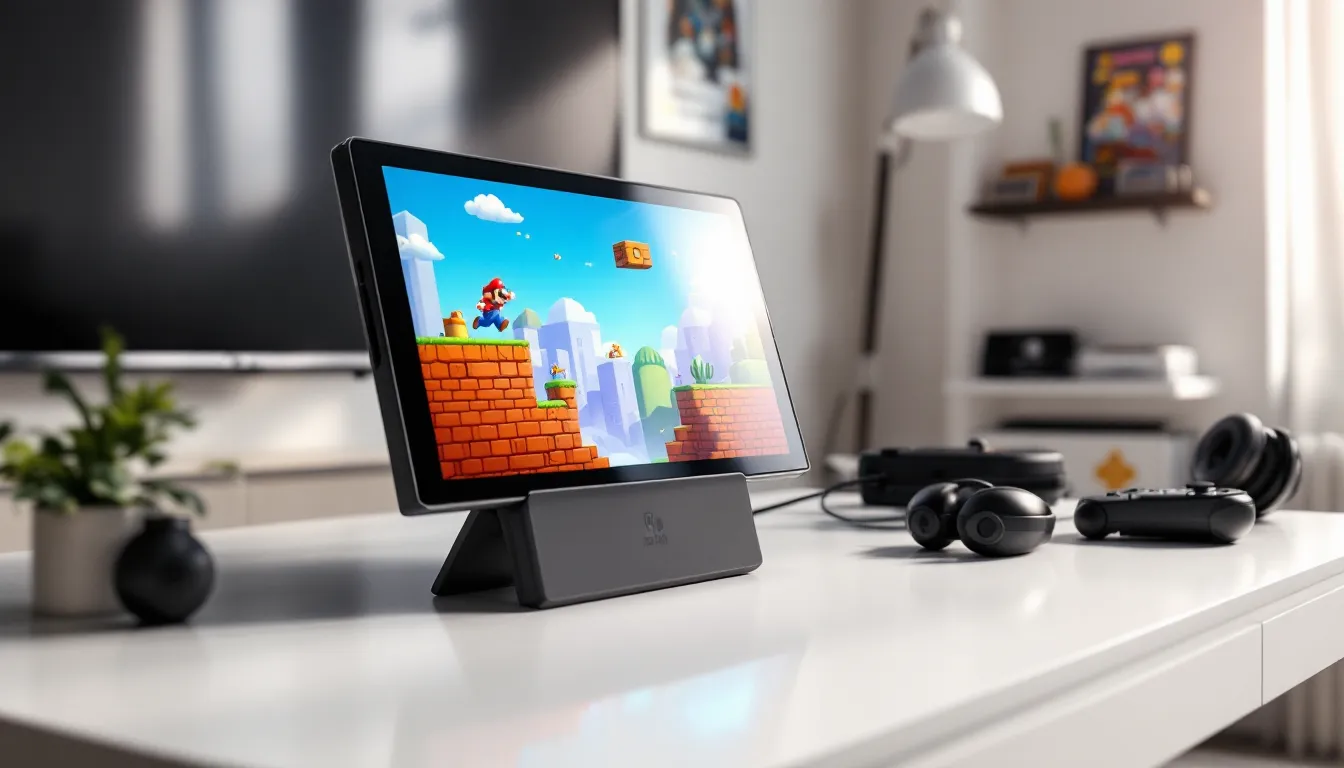
The Nintendo 64 defined a generation of gaming. Its controllers, games, and unforgettable moments shaped how millions of players experienced 3D worlds for the first time. Now, in 2026, Nintendo Switch players can relive those classics without dusting off old cartridges or hunting eBay listings. Nintendo Switch Online Plus Expansion Pack brings Nintendo 64 games directly to your hybrid console, offering convenience and nostalgia in one package. Whether you’re chasing childhood memories or discovering these titles for the first time, this guide covers everything you need to know about playing Nintendo 64 games on Switch, from subscription details to the best titles worth your time.
Table of Contents
ToggleKey Takeaways
- Nintendo 64 games on Switch are accessed through the Nintendo Switch Online Plus Expansion Pack subscription ($50 USD annually), which grants access to over 60 classic N64 titles without owning them outright.
- Essential N64 games to start with include Super Mario 64, The Legend of Zelda: Ocarina of Time, and Banjo-Kazooie—timeless masterpieces that remain engaging for both newcomers and returning players.
- The Switch’s N64 emulation delivers impressive quality with features like save states, online multiplayer, and 4-player local splitscreen, though games maintain their original frame rates and may require controller remapping for optimal play.
- Underrated gems like Paper Mario, Kirby 64: The Crystal Shards, Diddy Kong Racing, and Perfect Dark offer exceptional experiences beyond the most obvious picks and deserve exploration.
- Controller compatibility requires adaptation since the N64’s unique three-pronged design doesn’t match modern controllers; remapping buttons and using the Pro Controller or optional N64 replica improves the experience significantly.
- Performance optimization tips like using docked mode, enabling visual filters, maintaining free storage, and stable internet for online play maximize your Nintendo 64 games on Switch experience.
What Is Nintendo Switch Online Plus Expansion Pack?
Nintendo Switch Online Plus Expansion Pack is Nintendo’s premium subscription tier that grants access to an expanding library of Nintendo 64 (N64) and Game Boy Advance (GBA) titles on Switch. Launched in October 2021, it builds on the standard Nintendo Switch Online service, adding classic gaming to your digital collection.
How Access Works For N64 Games
Once you subscribe to the Plus Expansion Pack, N64 games appear as downloadable titles on the eShop. You don’t own them outright, they’re tied to your subscription, much like Netflix content. If you cancel, access ends. The process is straightforward: subscribe, download your desired N64 games, and play them on your Switch, whether docked or in handheld mode.
The emulation handles these games remarkably well. Save states work seamlessly, letting you pause mid-game and resume instantly, a feature the original N64 lacked. Online multiplayer also functions for compatible titles, though we’ll dive deeper into that later.
One important detail: the library isn’t static. Nintendo regularly adds new N64 titles, so what’s available today might expand next month. The company hasn’t announced a definitive final roster, which means checking back periodically is worthwhile.
Subscription Tiers And Pricing
Nintendo Switch Online has three tiers, and understanding the differences matters before you commit.
Nintendo Switch Online (Standard): $20 USD annually covers NES and SNES games, cloud saves, and online play for modern games. It’s the baseline, but it doesn’t include N64 or GBA access.
Nintendo Switch Online + Expansion Pack: $50 USD annually includes everything in Standard, plus Nintendo 64 games, Game Boy Advance titles, and DLC for games like Mario Kart 8 Deluxe. This is what you need for classic N64 gaming.
Family Membership (Expansion Pack): $80 USD annually covers up to eight accounts, making it the best value if you share your Switch with others. Each family member gets full Expansion Pack access.
Price increases have been controversial, but the value proposition hinges on how much you actually use the service. If you’re genuinely interested in N64 classics, the annual Expansion Pack subscription pays for itself against buying used cartridges. You’re also supporting Nintendo’s emulation infrastructure, which continues to improve with each update.
The Complete Library Of N64 Games Available On Switch
As of March 2026, Nintendo has added over 60 N64 titles to Switch, with occasional new releases. The library spans genres, so there’s something for every type of player. Here’s what you’re working with.
Action And Adventure Classics
This category features the heavy hitters that defined the N64 era.
The Legend of Zelda: Ocarina of Time stands as the flagship title. Released in 1998, it redefined adventure games with Z-targeting camera controls and a massive, explorable world. Even now, it’s considered one of gaming’s greatest achievements. Combat feels dated compared to modern action-adventures, but the puzzle design and dungeon variety remain unmatched.
The Legend of Zelda: Majora’s Mask, released in 2000, took a bizarre direction: you’re cursed to relive three days repeatedly unless you collect masks granting special powers. It’s unconventional, genuinely unsettling at times, and brilliant. Some players find it exhausting: others call it the series’ boldest entry.
Super Mario 64 essentially invented 3D platforming. The camera system and analog stick movement feel revolutionary even today, and its open-ended level design influenced game development for decades. Collectathon style games owe everything to this title.
Banjo-Kazooie borrowed heavily from Mario 64’s formula but added humor, charm, and inventive level design. Rare’s witty dialogue and character animations still impress. If you loved Mario 64, this is mandatory.
GoldenEye 007 was the game that proved first-person shooters could work on consoles. By modern standards, the aiming feels clunky and the frame rate dips, but the campaign remains engaging and splitscreen multiplayer still entertains.
Perfect Dark, Rare’s spiritual successor to GoldenEye, offers more content and tighter mechanics. It’s more ambitious and arguably more fun, though less iconic.
Other action titles worth noting: Kirby 64: The Crystal Shards, Donkey Kong Country 2 and 3 (actually SNES games, but relevant to N64-era nostalgia), Star Fox 64, and Turok: Dinosaur Hunter.
Racing And Sports Titles
The N64 had a surprisingly robust racing lineup.
Mario Kart 64 was a major release that didn’t age gracefully. The drifting feels floaty, tracks are wide and empty, and the frame rate isn’t consistent. Still, if you want Nintendo’s kart racer on Switch, this is your only N64 option here. Modern Mario Kart games are significantly better.
Diddy Kong Racing is the underdog champion here. It features more dynamic tracks, creative characters, and boss races that actually challenge you. Many argue it outshines Mario Kart 64 even in 2026.
Mario Golf and Mario Tennis bring solid minigame experiences. They’re simplified compared to modern sports games, but they’re fun for short sessions.
F-Zero X is a high-speed racer with extreme difficulty. The frame rate intentionally runs at 60 FPS with lower polygon counts, creating a distinct visual style. It’s intense and not for casual players.
Excitebike 64 offers arcade-style motorcycle racing with personality. It’s niche, but fans appreciate its charm.
Puzzle And Strategy Games
N64 wasn’t known for puzzle games, but a few made the cut.
Dr. Mario 64 is Tetris-meets-match-three, straightforward and addictive. It’s perfect for quick play sessions.
Puyo Puyo Sun is a Japanese puzzle game that plays like match-three but with vertical chains. It requires strategy and quick reflexes.
Bomberman 64 and Bomberman 64: The Second Attack deliver classic grid-based puzzle-action gameplay. They’re solid but feel limited compared to modern puzzle games.
Best Nintendo 64 Games To Play In 2026
Not all N64 games aged equally. Some remain absolute must-plays: others are best left to nostalgia. Here’s the honest breakdown.
Timeless Masterpieces Still Worth Playing
These titles transcend their era and justify your subscription alone.
Super Mario 64 remains essential gaming. Yes, the camera can frustrate, but once you adapt, the level design speaks for itself. Each stage is a sandbox bursting with secrets and creative challenges. For newcomers and veterans alike, it’s the N64 experience.
The Legend of Zelda: Ocarina of Time is the obvious second pick. It’s long, expect 25-30 hours, but never overstays its welcome. The dungeons are masterfully crafted, the story hits hard, and the world still feels vast and mysterious. Play it.
Banjo-Kazooie earns its spot through sheer charm and quality level design. It’s slightly easier than Mario 64 but equally rewarding. The humor holds up, and the platforming feels fair. If you’re new to the N64, this and Mario 64 are your starting point.
Perfect Dark is underrated. It has more content than GoldenEye and refined mechanics. The campaign is longer, multiplayer is deeper, and the difficulty settings actually change enemy behavior, not just health pools. It’s worth your time.
Star Fox 64 is short, 3-4 hours for a full playthrough, but it’s designed to be replayed. Multiple paths, hidden bosses, and ranking systems give it longevity. It’s arcade distilled into a cartridge. The game featured the Rumble Pack, which transformed 90s gaming forever, creating tactile feedback that immersed players entirely.
More keepers: Paper Mario, Mario Party 2, Kirby 64: The Crystal Shards, and Donkey Kong 64.
Hidden Gems And Underrated Titles
These won’t get talked about as much, but they deserve your attention.
Kirby 64: The Crystal Shards is criminally overlooked. It’s a 2D platformer in a console known for 3D, but that’s exactly why it stands out. Power-up combinations are creative, the art style is gorgeous, and the difficulty curve is perfectly balanced.
Paper Mario is a turn-based RPG that invented its own identity. The writing is witty, battles are strategic, and the story genuinely surprises. Modern Paper Mario games have drifted in different directions, making this original even more special.
Wave Race 64 is a jet ski racer that nails the physics. Water behavior looks stunning, and the arcade-to-simulation balance is perfect. It’s racing without the complexity of Gran Turismo, but with more depth than arcade racers.
Diddy Kong Racing was mentioned earlier, but it truly deserves emphasis. It’s arguably better than Mario Kart 64, with more creative tracks, a story mode with personality, and boss races that feel like genuine challenges. N64 games on Switch often shine brightest when you venture beyond obvious picks, and DKR is exhibit A.
Glover is a puzzle-platformer where you play as a sentient glove protecting an orb. It’s weird, creative, and largely forgotten. If you want something different, Glover delivers.
Bomberman 64: The Second Attack improves on the original with better level design and more strategic gameplay. It’s not revolutionary, but it’s solid party fun.
Sin & Punishment is a rail-shooter that’s genuinely difficult and rewarding. It requires precision and pattern recognition. Completionists will love it.
For guides on specific games, resources like Twinfinite offer walkthroughs and tier lists that help identify which titles align with your preferences.
Performance And Emulation Quality On Switch
Nintendo’s N64 emulation on Switch works remarkably well, but understanding its limitations matters.
Graphics And Frame Rate Considerations
N64 games weren’t pixel-perfect. They often targeted 30 FPS or lower, with fluctuations depending on scene complexity. Star Fox 64 ran at 60 FPS, making it an outlier. GoldenEye hovered around 20-25 FPS in multiplayer.
Switch’s emulation maintains the original frame rates, which means dips are intact. This doesn’t ruin gameplay, you’re used to it if you’re familiar with the originals, but it’s worth noting if you’re coming from modern 60 FPS gaming.
Resolution upscaling is minimal. Games render at their original resolutions with simple filtering applied. This preserves the authentic aesthetic but means you won’t get HD remasters. The visual quality is intentionally vintage.
Some games suffer from emulation quirks. GoldenEye has occasional graphical glitches that didn’t exist on hardware. Majora’s Mask can have frame pacing issues. These are minor irritations in an otherwise solid emulation layer, and Nintendo has patched some problems over time.
Controller Compatibility And Configuration
This is where it gets tricky. The N64 controller was… unique. Three-pronged, with an analog stick that drifted after years of use and button layouts that make no sense by modern standards.
Switch’s Pro Controller and Joy-Cons are the default controllers for N64 games. They work, but the control schemes need remapping. Games like Super Mario 64 and Banjo-Kazooie were designed around the N64’s bizarre layout, and translating that to modern controllers requires some adaptation.
Joy-Cons work in most games but feel cramped for longer sessions. The sticks are prone to drift, which is ironic considering original N64 sticks had the same problem.
Pro Controller is generally superior. It has a better d-pad, larger sticks, and ergonomic shape. But, the stick placement doesn’t perfectly match the N64 design, so aiming in first-person shooters like GoldenEye feels slightly off.
Nintendo released an N64 Controller replica for Switch in 2021. It mimics the original design and layout, making games feel authentic. The catch: it’s expensive (around $60), only works with N64 games, and stock is perpetually limited. If you’re serious about authenticity, it’s worth hunting for.
Alternatively, third-party manufacturers offer GameCube-style controllers and custom N64 replicas with improved analog sticks and USB connectivity. Some gaming communities swear by these, and N64 controller mods have become increasingly popular for serious players seeking precision and durability.
Controller remapping is crucial. Take five minutes in each game’s settings to adjust button assignments to your preference. Default mappings often feel unintuitive.
Drifting is a real concern. If you’re playing precision games like Mario 64 or Star Fox 64 repeatedly, your controller will eventually drift. Keep spare Joy-Cons or a Pro Controller on hand, and don’t ignore the problem, Nintendo offers repairs through official channels.
Online Features And Multiplayer Support
One of the biggest wins for N64 on Switch is online multiplayer. The original hardware required physical cartridges and local connection devices: now you can play across the world.
Online Play Capabilities For Retro Games
Not every N64 game supports online play, but the major titles do.
GoldenEye 007 and Perfect Dark both support online multiplayer up to four players. You’re not limited to local splitscreen anymore. Lag is generally minimal on stable connections, though internet quality affects experience. Servers are Nintendo’s, so they’re stable and reliable.
Mario Kart 64 has online play, which transforms it from dated to actually playable. Racing against humans adds unpredictability that AI opponents can’t match. Still, the core mechanics are weaker than modern Mario Kart, so don’t expect it to rival Mario Kart 8 Deluxe.
Mario Party 2 and other Mario Party titles support online play in certain modes. The RNG-heavy nature of Mario Party means online play is more chaotic, but that’s the charm.
Smash Bros. 64 was added to the library and supports online multiplayer. It’s primitive compared to the N64 Smash Bros game that changed fighting forever, but for what it is, online play is functional and fun.
Other titles like Bomberman 64, Kirby 64, and various racing games have varying levels of online support. Always check individual game descriptions on the eShop before assuming online is available.
Online play requires an active Nintendo Switch Online Expansion Pack subscription. Lag compensation is decent, but international matches can suffer if both players have unstable connections. Play with people geographically close to you for the best experience.
Local Multiplayer And Split Screen
Most N64 games supported 4-player splitscreen or simultaneous multiplayer. Switch maintains this functionality, which is massive for local gaming.
GoldenEye 007 and Perfect Dark let up to four players compete on a single Switch using multiple controllers. This is how the originals were meant to be played, and it works flawlessly on Switch.
Mario Kart 64 splitscreen is supported, though the frame rate drops noticeably with all four players. It’s still playable and fun, just not optimized.
Mario Party 2 supports four-player games locally, making it perfect for game nights. Since you control one Switch, no additional hardware is needed, just grab controllers.
Smash Bros. 64 supports 1-4 player local multiplayer on a single console. Local tournaments are genuinely viable.
Bomberman 64 is a party game at heart. Four-player local matches are chaotic and entertaining.
One caveat: splitscreen performance varies. Some games maintain frame rate better than others. GoldenEye, for instance, dips into the teens during heavy 4-player matches, but the gameplay remains responsive. If consistent frame rate is critical to your experience, stick to online play or single-player modes.
Joy-Cons work for multiplayer, but they’re small for extended sessions. Using multiple Pro Controllers or additional Joy-Con pairs is more comfortable. If your friends are coming over, make sure you have enough controllers before starting.
For competitive tournaments or serious multiplayer testing, resources like GamesRadar+ provide guides and tips on optimal settings and tournament formats for retro games.
Tips For Maximizing Your N64 Switch Experience
Getting the most from N64 on Switch requires understanding the platform quirks and optimization opportunities.
Recommended Settings And Optimization
Controller Settings: Remap buttons to match modern conventions. For example, in Super Mario 64, map the C-buttons to the right analog stick for camera control, it’s more intuitive than defaults. Test configurations in a short play session before committing to longer games.
Video Filtering: The eShop listing for each game shows optional visual filters. Some offer blur reduction, integer scaling for a cleaner image, or CRT scanlines for authenticity. Experiment to find your preference. Not all filters work equally well across all games.
Handheld vs. Docked: Most N64 games feel better in docked mode on a larger screen. The original games were designed for CRT televisions, and docked play approximates that better. Handheld mode works in a pinch, but squinting at a 6.2-inch screen defeats the nostalgia.
Save States: Use them liberally. N64 games didn’t have save states, but the Switch emulation offers this feature. Save before difficult boss battles or complex sections. It removes artificial difficulty spikes.
Motion Controls: Some games have experimental motion control options. Ignore them unless you’re curious, traditional controls are superior for these games.
Storage: N64 games don’t consume significant storage, but if your Switch’s storage is full, games perform worse. Keep at least 5-10 GB free for optimal performance.
Internet Stability: For online multiplayer, use wired internet through a USB adapter if possible. Wi-Fi works, but Ethernet is more stable, especially during 4-player matches where latency multiplies.
Troubleshooting Common Issues
Game Won’t Load: Ensure your Expansion Pack subscription is active. Subscriptions expire, and access stops immediately. Reboot your console if the issue persists. Clearing cache (go to Settings > System > Storage > Manage Storage) sometimes resolves load errors.
Frame Rate Drops: This is often normal. N64 games ran at lower, inconsistent frame rates. If drops are extreme (dipping into single digits), restart the console. Ensure no other applications are running in the background. Playing docked with a stable internet connection reduces drops.
Controller Drift: Test your controller in System Settings > Controllers > Calibrate. Most drift can be fixed through calibration. If recalibration fails, the stick needs replacement. Contact Nintendo support for repairs or purchase a new controller.
Audio Issues: Some games have audio compression or crackling in certain scenes. This is emulation artifact, not a console defect. Adjusting audio settings in your TV or headphones might help. Most games are unaffected.
Online Lag: If you’re experiencing lag during online play, check your internet speed (target: 50+ Mbps download). Reduce background downloads or streaming on your network. Play during off-peak hours if possible. Sometimes lag is unavoidable if the opponent has poor connection, there’s no fix on your end.
Game Crashes: Save frequently and restart your console before each play session. Clear cache if crashes persist. File a report with Nintendo through the eShop, they track crashes and push fixes in updates.
Controller Mapping Resets: Occasionally, remapped controls revert to defaults after updates. Screenshot your preferred configurations and save notes. Re-mapping is quick, but preparation saves frustration.
For more detailed optimization and performance insights, Nintendo Life regularly publishes updates on N64 emulation improvements and community-reported fixes.
Conclusion
Nintendo 64 games on Switch deliver authentic nostalgia with modern conveniences. You’re not stuck playing via emulators on a PC or hunting for overpriced original cartridges, the Expansion Pack makes these classics accessible, affordable, and genuinely playable in 2026.
Start with the big three: Super Mario 64, The Legend of Zelda: Ocarina of Time, and Banjo-Kazooie. These are the foundation. Once you’ve experienced those, explore the library’s depth. Perfect Dark, Kirby 64: The Crystal Shards, Diddy Kong Racing, and Star Fox 64 are all capable of stealing dozens of hours.
The emulation isn’t perfect, frame rate dips exist, controllers need remapping, and some quirks persist, but Nintendo’s implementation is genuinely impressive. Online multiplayer transforms games like GoldenEye, and save states ease the experience without removing the challenge.
Subscription fatigue is real, but the Expansion Pack justifies its cost if you’re serious about gaming history. These titles shaped the industry. Playing them helps you understand why modern game design exists as it does. That’s worth the investment.

