
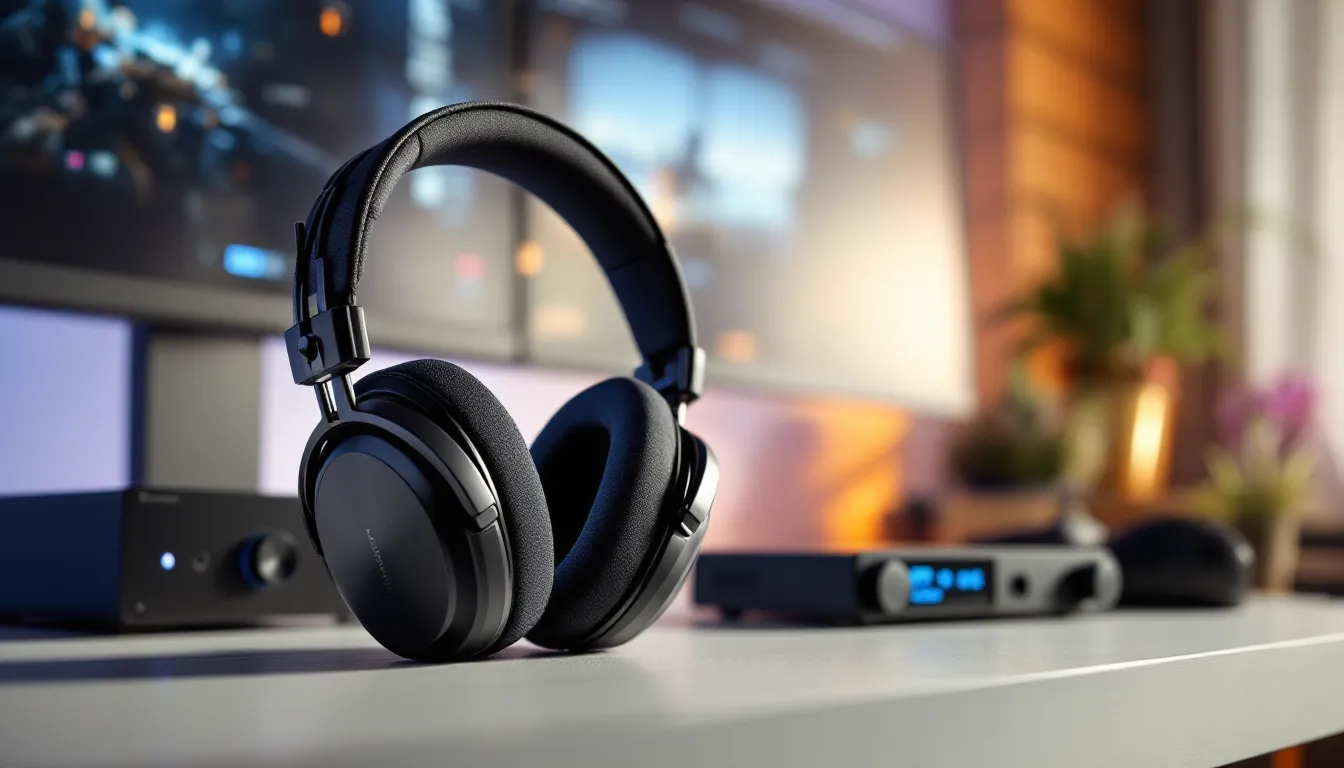
If you’re serious about gaming and you’re tired of playing through tinny, uncomfortable headphones, the DT 990 Pro deserves your attention. Beyerdynamic’s been making professional studio headphones for decades, and their flagship open-back model has developed a cult following among competitive gamers, streamers, and audio enthusiasts who refuse to compromise on clarity. The thing is, a lot of gamers either don’t know about the DT 990 Pro or assume studio headphones don’t belong in competitive play. That’s where the misconception ends. With accurate sound separation, a forward treble profile that highlights footsteps and directional cues, and a build that rewards long sessions, the DT 990 Pro punches way above its price point for gaming. This guide breaks down everything you need to know: the specs that matter, how it performs in different genres, setup requirements, and whether it’s actually the right choice for your setup.
Table of Contents
ToggleKey Takeaways
- The DT 990 Pro for gaming combines professional audio engineering with a treble-forward sound signature that enhances footstep detection and positional audio, giving competitive shooters a tangible advantage over standard gaming headsets.
- Its open-back design creates a spacious, three-dimensional soundstage that pinpoints enemy positions more reliably and reduces ear fatigue during marathon gaming sessions, outperforming closed-back headsets across multiple game genres.
- At $150–170, the DT 990 Pro undercuts premium gaming headsets by $100+ while delivering superior sound quality and durability, though you’ll need to budget an additional $30–100 for amplification and provide your own microphone.
- The headphones excel in competitive shooters like Valorant and Counter-Strike 2 where audio cues determine outcomes, and enhance immersion in RPGs and single-player games through clear dialogue separation and detailed environmental audio.
- With a replaceable ear pad design, detachable 3.5mm cable, and metal-frame construction, the DT 990 Pro is built for longevity rather than annual upgrades, making it a smarter investment than gaming-branded alternatives.
- Sound leakage is substantial and amplification from standard motherboards is insufficient, so success depends on having a quiet gaming space and investing in a proper DAC or headphone amplifier.
Why The DT 990 Pro Stands Out For Gamers
The DT 990 Pro sits in a weird sweet spot between professional audio equipment and gaming gear, and that’s exactly why gamers love it. Unlike gaming-branded headsets (which often prioritize RGB lights over actual audio quality), the DT 990 Pro was engineered for accuracy in a studio environment. That means every sound is rendered with precision, which translates directly to competitive advantage in games where audio cues matter.
Open-back design is the secret sauce here. While closed-back gaming headsets trap sound and create a claustrophobic soundstage, the DT 990 Pro’s open-back design creates a spacious, three-dimensional audio field. You can pinpoint enemy positions more reliably, hear callouts from teammates without isolation fatigue, and experience ambience in single-player games that actually enhances immersion instead of feeling like background noise.
The treble-forward tuning is intentional, not accidental. Beyerdynamic’s “Beyer Peak” (a presence peak around 5-10 kHz) emphasizes the frequencies where footsteps, gunfire, and directional audio cues live. In Counter-Strike 2, Valorant, Rainbow Six Siege, or Apex Legends, you’ll hear things your teammates with gaming headsets simply won’t catch. That’s not hype, that’s frequency response data at work.
Plus, at a street price around $150-170, the DT 990 Pro undercuts most premium gaming headsets while delivering better sound quality. You’re not paying for branding or gamer aesthetics: you’re paying for actual engineering.
Key Specifications and Audio Features
Driver Configuration and Sound Profile
The DT 990 Pro features 40mm dynamic drivers that handle a frequency response of 5 Hz to 35.7 kHz. That range is overkill for gaming (humans can’t hear below 20 Hz or above 20 kHz anyway), but it speaks to the headphones’ precision engineering. The impedance is 250 Ohms, which is higher than consumer-grade gaming headsets but becomes relevant when we talk about amplification.
The sound signature is distinctly treble-forward with a boosted presence peak. This isn’t a flat, reference-accurate profile like you’d get with studio monitors. Instead, Beyerdynamic tuned the DT 990 Pro for detail retrieval and liveliness. Bass is present but not bloated, it won’t overwhelm lower frequencies in explosions or bass-heavy tracks. Midrange is slightly recessed, which gives the soundstage that open, airy quality gamers crave.
Build Quality and Durability
The headband uses a metal frame with adjustable padding, designed to last through years of heavy use. The ear cups are replaceable, which matters if you’re planning to keep these for a while. Beyerdynamic sells replacement pads separately, so you’re not locked into a disposable headset ecosystem. The cable is detachable and uses a 3.5mm stereo jack, giving you flexibility to swap cables without replacing the whole unit.
Weight sits around 250 grams, which is reasonable for open-back cans of this size. They’re not feather-light, but they’re not clunky either. The metal frame feels premium without being brittle, this is equipment designed for professional use, and it shows.
Impedance and Connectivity Options
That 250 Ohm impedance is important to understand. Straight from your motherboard audio jack or a console controller, the DT 990 Pro will play, but quietly. You’ll need actual volume before the sound reaches comfortable gaming levels. Integrated soundcards on most motherboards can push these, but they’ll work harder and introduce more noise. This is where amplification becomes relevant (we’ll cover that later).
The headphones come with a 3.5mm stereo jack, and Beyerdynamic includes a 1/4-inch adapter for studio setups. There’s no wireless, no USB connector, no microphone. This is a pure audio tool, which means you’ll need a separate mic if you’re streaming or playing multiplayer games with team chat.
Sound Quality for Competitive Gaming
Spatial Audio and Positional Cues
Here’s where the DT 990 Pro earns its reputation among competitive gamers. The open-back design creates a wide soundstage that doesn’t feel cramped or boxed-in. In Valorant, when an enemy peeks from the left side of the map, the audio doesn’t just come from your left, it feels like it’s coming from a specific point in space. That spatial separation is crucial for sub-200ms reaction time plays.
The large ear cup spacing and open design also minimize the “in-head” localization that plagues closed-back headsets. Instead of sounds feeling pinned inside your skull, they feel external and positioned. Over long gaming sessions, this reduces listener fatigue because your brain isn’t constantly fighting against unnatural audio placement.
In first-person shooters specifically, footstep clarity is exceptional. The treble peak that makes some people grimace in casual listening becomes your best friend when you’re trying to track approaching enemies. You’ll hear the exact moment someone rounds a corner, whether they’re above or below you, and roughly how far away they are. That’s information a standard gaming headset simply doesn’t convey as clearly.
Treble Response and Clarity
The DT 990 Pro’s presence peak around 5-10 kHz is the technical reason it excels at competitive gaming. This is the frequency range where human hearing is most sensitive, and where most crucial gaming audio, footsteps, gunfire, ability activation sounds, radar pings, lives. Beyerdynamic cranked this up intentionally, and it works.
Mid-range is slightly recessed, which prevents the headphones from sounding harsh even though the treble emphasis. Voices in team chat come through clearly without becoming fatiguing, and environmental ambience doesn’t muddy the mix. The result is a tonal balance that feels clean and detailed without the sibilance that makes cheaper treble-heavy headsets sound like you’re listening to a angry cat.
For RPGs and single-player games, this same treble response means you won’t miss subtle audio cues. Dialog clarity is excellent, orchestral soundtracks have proper definition, and ambient noise (wind, rain, creeping tension) feels more immersive because each element occupies its own space in the mix.
Comfort and Long Gaming Sessions
Headband Design and Fit
The DT 990 Pro’s headband uses a self-adjusting mechanism that distributes pressure evenly across the top of your head. Unlike rigid headbands that dig into a single pressure point, this design spreads clamping force across a larger area. For marathon gaming sessions, we’re talking 8+ hours of competitive play or streaming, that difference adds up.
Adjustment is smooth and precise. The ear cups rotate and pivot, so you can find a natural fit even if your head shape is atypical. The metal hinges feel solid and don’t develop creaks or wobble over time. After extended use (months or years), the headband maintains its grip without becoming either too tight or too loose.
The fit is generally considered “medium,” so people with very large or very small heads might experience minor comfort issues. But the vast majority of gamers report a secure fit without pressure hotspots. The openness of the ear cups also means airflow around your ears, which reduces the sweaty ear feeling that closed-back headsets create during intense gaming.
Ear Cup Padding and Pressure Points
This is where opinions diverge. The DT 990 Pro ships with velour ear pads, soft, breathable fabric that feels nice initially and doesn’t cause heat buildup. For gamers, that’s a major win. You can comfortably wear these for 8+ hours without your ears feeling like they’ve been in a sauna.
But, the pads are thinner than some competitors, which means the ear cup rim can contact the outer part of your ear if you have larger ears or if you’ve moved the ear cups up during adjustment. This is fixable: replacement ear pads in different materials (thicker velour, leather, hybrid) cost $20-30 and swap out in seconds. It’s a non-issue if you’re aware of it.
The ear cup seal is intentionally loose, remember, these are open-back headphones. They don’t create a pressure seal around your ear, which actually enhances comfort over multi-hour sessions. That’s the trade-off with open-back design: sound leaks out (people nearby can hear your game), but you also get superior long-term wearability compared to closed-back alternatives.
DT 990 Pro vs. Competing Gaming Headphones
Price-to-Performance Value
At $150-170 USD, the DT 990 Pro is cheaper than most dedicated gaming headsets from Corsair, SteelSeries, or HyperX in the same sound quality tier. You’re also not paying for RGB lighting, wireless latency compensation, or gaming-specific software. What you’re paying for is accurate audio engineering and durability.
Compare that to a HyperX Cloud Orbit ($300+), which adds spatial audio processing but comes with worse battery life and doesn’t perform better in competitive shooters. Or a SteelSeries Arctis Pro ($300+), which adds wireless and better isolation but charges premium pricing for gaming aesthetics. The DT 990 Pro does less on paper but delivers more for gaming performance per dollar.
That said, the DT 990 Pro requires amplification for optimal performance, which adds cost. Budget an extra $30-80 for a decent amp if you’re connecting to a motherboard, console, or external DAC. Total system cost: $180-250. Still competitive, but worth factoring in.
Comparison With Popular Alternatives
The most direct competitor is the Audio-Technica ATH-AD700X, another open-back headphone at a similar price point. The AD700X has slightly wider soundstage and lower impedance (38 Ohms vs 250), so it plays louder from weak sources. But, the DT 990 Pro’s treble response is more pronounced, making it better for competitive gaming where footstep clarity matters most. The AD700X might edge it out for comfort if you have sensitivity to treble.
For a closed-back alternative, the Sennheiser HD 660S ($300-400) offers better tonal balance and slightly warmer sound. It’s more comfortable for isolation-heavy environments and doesn’t let sound leak, but it sacrifices the spatial definition that makes the DT 990 Pro shine in competitive play. They’re different tools for different use cases.
If you want wireless, no equivalent exists at this price point. Wireless gaming headsets add latency (usually 20-50ms), require charging, and introduce compression artifacts that the DT 990 Pro’s wired connection eliminates entirely. You’re trading sound quality for convenience, which might be worth it if you game across multiple rooms in your house.
Looking at actual pro player settings, many competitive Counter-Strike and Valorant pros use wired, audiophile-grade headphones similar to the DT 990 Pro rather than branded gaming headsets. That’s not accidental, it’s because audio quality directly impacts competitive performance.
Setup Tips for Optimal Gaming Performance
Amplification and Volume Requirements
That 250 Ohm impedance comes with a caveat: weak audio sources struggle to drive these headphones to comfortable listening levels. If you’re connecting to a motherboard’s 3.5mm jack or a console controller, you’ll max out your audio interface’s volume and still end up too quiet. This isn’t a defect, it’s audio impedance at work.
You have two main solutions. First, a dedicated headphone amplifier (portable amps like the FiiO K3 Pro or iFi Zen DAC, $60-150) pairs with your audio source via USB or optical and delivers proper amplification. These also improve sound quality by lowering noise floor and providing cleaner power to the drivers. Second, if your motherboard has a high-quality audio chipset (like those found in gaming-focused boards), you might get adequate volume directly. It’s worth testing before buying an amp.
Console gamers (PS5, Xbox Series X) can drive the DT 990 Pro adequately from the controller’s 3.5mm jack, though an external amplifier will still improve quality. The benefit is more pronounced on PC, where motherboard audio quality varies wildly.
For streaming setups, route your audio through a DAC/amplifier combo that lets you split output: one feed to your headphones (for monitoring), another to your streaming interface (for stream audio). This gives you zero-latency monitoring and clean stream audio simultaneously.
Audio Interface Recommendations
If you’re streaming, recording, or want professional-grade audio quality, pair the DT 990 Pro with a mid-range audio interface. The Behringer U-Phoria UMC204HD ($100) is overkill for gaming but offers excellent value if you’re also producing content. It’s built for low-latency monitoring and handles the DT 990 Pro’s impedance without breaking a sweat.
For pure gaming, a dedicated headphone amplifier like the FiiO E10K or Schiit Magni 3+ ($100-150) is more practical. Plug into your motherboard’s USB, connect the DT 990 Pro, and you’ve got a complete audio solution. These amps are compact, don’t require software, and just work across PC, Mac, and Linux.
Console gamers don’t need external gear beyond the headphones themselves. PS5 and Xbox Series X controllers output adequate power for the DT 990 Pro. If you want to optimize further, a small portable DAC/amp increases volume headroom and improves bass response.
Real-World Gaming Performance Across Genres
Competitive Shooters and FPS Games
This is where the DT 990 Pro shines brightest. In Counter-Strike 2, the treble-forward profile lets you hear every footstep with surgical precision. You can distinguish between different agent footsteps, detect crouch-walking, and pinpoint approach vectors with clarity that’s genuinely unfair if your opponents are using standard gaming headsets. The same advantage applies to Valorant, where ability audio cues and spike planting sounds become unmissable.
In Rainbow Six Siege, the soundstage separation helps locate enemies in vertical gameplay. When someone’s above you or below you, the audio positioning creates accurate vertical cues. Combined with the treble detail, you’ll catch rappel sounds, vault audio, and operator ability timing faster than you would through console speakers or gaming headsets with compressed soundstages.
Call of Duty, Overwatch 2, and Apex Legends all reward detailed audio, and the DT 990 Pro delivers. Enemy pings, footsteps, ability activations, and reload audio all occupy distinct spaces in the mix. You won’t “game” the audio competitively like you do with tuned gaming headsets, but you will hear more information, faster, and with greater accuracy.
Note: Pro player settings often reveal that top-tier competitors across multiple titles prefer wired, neutral-leaning headphones over gaming-branded wireless sets. That empirical data aligns with what the DT 990 Pro offers.
RPGs, Strategy, and Immersive Titles
Outside of competitive play, the DT 990 Pro excels at immersive single-player experiences. In Baldur’s Gate 3 or Starfield, the expanded soundstage makes dialogue and environmental audio feel like they occupy real space. The treble clarity prevents dialog from getting muddy even when multiple characters speak simultaneously.
Elden Ring, Dark Souls, and other FromSoftware titles benefit from the clean audio separation. Boss audio cues, breathing, footsteps, weapon audio, come through with clarity that aids both immersion and practical gameplay. You’ll hear that dragon is about to stomp or that Malenia is charging her waterfowl attack sooner than you would through inferior headphones.
Strategy games like StarCraft II and Company of Heroes 3 don’t demand aggressive treble clarity, but they benefit from the wide soundstage and detailed audio. You can follow multiple units, explosions, and environmental effects without losing individual audio threads. The open-back design also prevents fatigue during 2-3 hour gaming sessions where audio is secondary to visual information.
For immersive sims like Dishonored 2 or Prey, the audio positioning lets you mentally map enemy locations and patrol patterns just from sound alone. That’s a luxury of having headphones with accurate spatial audio.
Take note: Recent headset comparisons from RTINGS consistently place open-back headphones like the DT 990 Pro higher for soundstage accuracy compared to gaming-branded alternatives, which is directly relevant for immersive title enjoyment.
Pros and Cons for Gaming Use
Pros:
- Superior audio clarity and detail retrieval for competitive gaming advantage in footstep detection and positional audio
- Wide, accurate soundstage that beats closed-back gaming headsets at spatial positioning
- Open-back design eliminates ear fatigue during marathon gaming sessions
- Durable, repairable construction with replaceable ear pads and detachable cable
- Exceptional value at $150-170 compared to gaming headsets at double the price
- No wireless latency or battery concerns: pure wired reliability
- Accurate frequency response translates well across multiple game genres
- Professional audio quality without gaming tax pricing
Cons:
- Requires amplification for proper volume levels from most motherboards or consoles (adds $30-150 to total cost)
- Sound leakage is substantial: people nearby will hear your game audio
- No microphone included: requires separate mic for multiplayer team chat
- Treble-forward sound signature might feel harsh during music listening or in non-competitive gaming
- Open-back design provides no isolation from background noise (desktop fan, roommate, etc.)
- Impedance sensitivity means not all audio sources drive them optimally
- Velour ear pads are thinner than some prefer: may need aftermarket upgrade for extended comfort
- No wireless option for gamers who move between rooms or want cable-free setup
- Build is heavy enough (250g) that some users experience minor headband pressure over 8+ hour sessions
The cons are manageable trade-offs rather than deal-breakers. The lack of a microphone is actually a feature if you prefer a separate gaming mic (more flexibility, better positioning). Amplification requirements are solved once with a $50-100 amp. Sound leakage only matters if you share space with others who value silence.
Is The DT 990 Pro Right For You?
The DT 990 Pro is the right choice if you’re a competitive gamer prioritizing audio performance, you have a relatively quiet gaming space (or live alone), and you’re willing to spend $180-250 on a complete wired audio setup. If footstep clarity, positional audio, and multi-hour comfort matter more to you than wireless convenience, these headphones are probably the best value on the market.
You should skip the DT 990 Pro if you need a microphone built-in (you’ll have to buy a separate one anyway), you require wireless functionality, you’re sensitive to treble, or you share a space where sound leakage bothers people nearby. If gaming in isolation and audio quality are both high priorities, though, you won’t find better headphones at this price.
For content creators streaming gameplay, the DT 990 Pro pairs beautifully with a dedicated streaming mic and DAC setup. You get zero-latency monitoring, clean audio quality, and professional-grade monitoring without the RGB and gaming tax. For esports competitors, these are the real deal, professional-grade audio engineered for clarity, not marketing.
Budget-wise, expect to spend $150-170 on the headphones plus $30-100 on amplification if you’re coming from a standard motherboard audio output. That’s still cheaper than most gaming headsets at comparable audio quality levels, and you’re investing in durability rather than RGB lights and annual refresh cycles.
One final consideration: Technology reviews from PCMag regularly compare gaming accessories, and professional audio equipment consistently outperforms gaming-branded alternatives in blind tests. The DT 990 Pro sits at the intersection of professional audio and gaming performance, which is why so many competitive players and streamers choose it.
Conclusion
The DT 990 Pro for gaming isn’t a gaming headset, it’s a professional audio tool that happens to excel at competitive and immersive gaming. That distinction matters. Instead of paying gaming tax for mediocre audio wrapped in RGB lighting, you’re buying 40 years of Beyerdynamic’s professional audio expertise and applying it to your gaming setup.
The open-back design, treble-forward tuning, wide soundstage, and durable build deliver tangible competitive advantages in shooters and exceptional immersion in single-player titles. Audio clarity directly translates to reaction time in Valorant, footstep positioning in Counter-Strike 2, and environmental awareness in Dark Souls or Elden Ring. At $150-170 (plus amplification if needed), you’re getting performance that competes with $300+ gaming headsets at half the price.
Yes, you’ll need to handle amplification separately, accept sound leakage, and supply your own microphone. Those aren’t flaws, they’re trade-offs that serious gamers readily accept in exchange for audio quality and durability. The DT 990 Pro rewards commitment: invest in good amplification, find a setup that works for your space, and you’ve got headphones that’ll last years while delivering consistent audio performance across every game you play.
If you value audio clarity, long-session comfort, and getting the most value per dollar, the DT 990 Pro belongs on your shortlist.

